



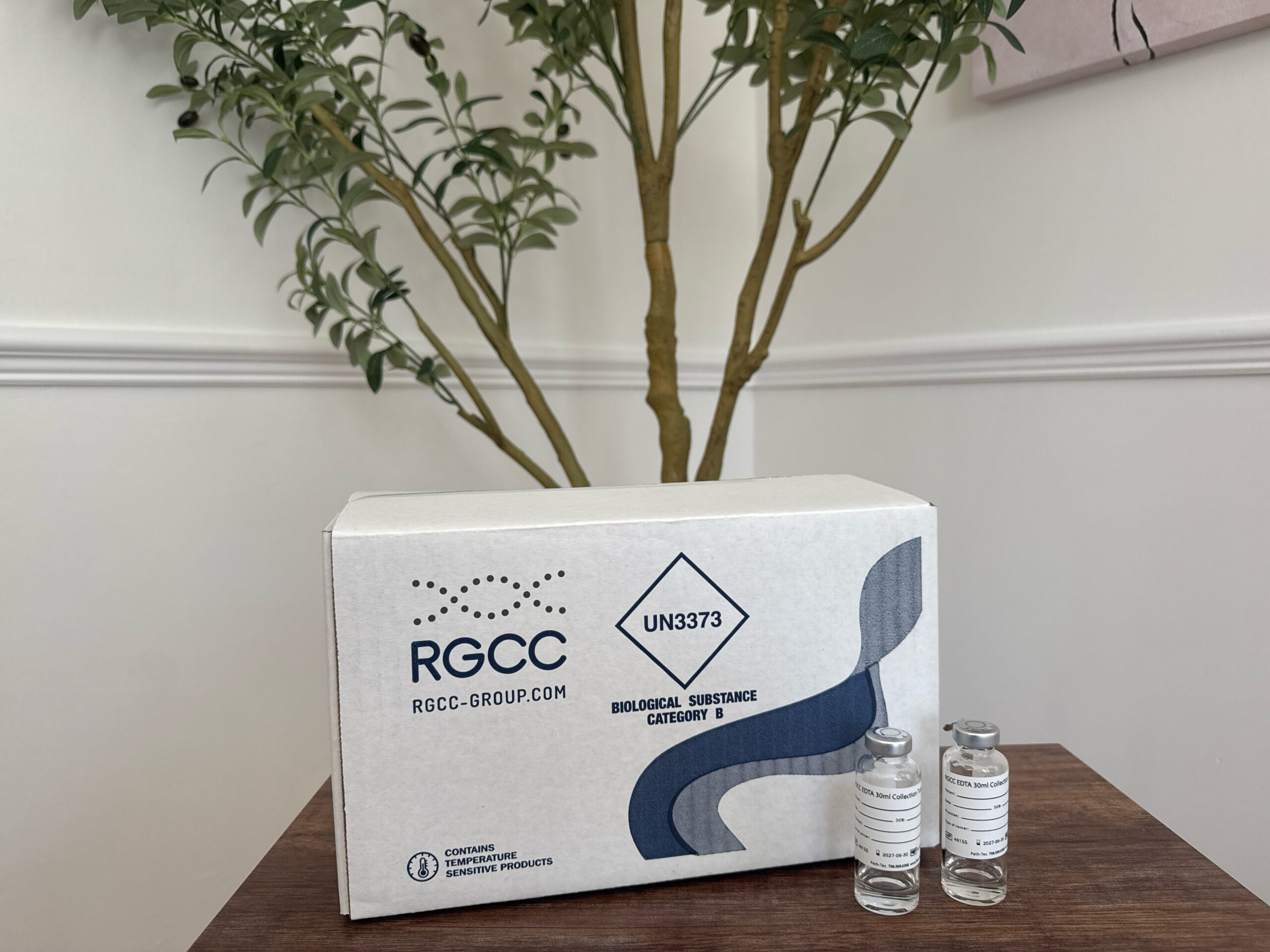

A Personalized Approach to Cancer Assessment and Treatment Planning
Cancer care is changing.
For decades, most cancer treatment decisions were based primarily on imaging studies, pathology reports, and the location of a tumor in the body. While those tools remain essential, advances in laboratory technology now allow us to gather additional information about how cancer cells may behave and how they may respond to various treatment approaches.
Patients often come to our clinic asking whether there are ways to better understand their cancer risk, monitor their progress, or develop a more personalized treatment strategy. RGCC testing is one option that may provide additional information.
What Is RGCC Testing?
RGCC stands for the Research Genetic Cancer Centre, a laboratory that specializes in analyzing circulating tumor cells (CTCs) and other cancer-related biomarkers found in the bloodstream.
Unlike traditional tissue biopsies, which require obtaining a sample directly from a tumor, RGCC testing uses a blood sample.
The goal is to identify and evaluate cancer-related cells that are circulating throughout the body.
This information can potentially help practitioners:
- Assess circulating tumor cell activity
- Monitor treatment response
- Evaluate cancer-related biomarkers
- Explore potential sensitivity to natural substances
- Investigate possible treatment strategies that may be personalized to the individual
Understanding the Onco-D-Clare Test
One of the newer tests available through RGCC is the Onco-D-Clare test.
Unlike traditional screening methods that focus on detecting established tumors, Onco-D-Clare evaluates cellular markers found in the bloodstream that may be associated with early cancer processes.
The goal of Onco-D-Clare is to provide an additional layer of information about cancer-related biological activity occurring within the body before symptoms may be present or before disease is visible through imaging.
The test may be considered by individuals who:
- Have a strong family history of cancer
- Desire a more proactive approach to monitoring their health
- Have previously been diagnosed with cancer and wish to monitor changes over time
- Are interested in advanced cancer-related biomarker testing
The Most Advanced Option: Onconomics Plus
One of the most widely discussed RGCC tests is Onconomics Plus.
This test moves beyond simply identifying circulating tumor cells (CTCs).
Instead, it attempts to evaluate how those cells respond when exposed to various treatment agents in the laboratory.
Think of it as creating a personalized “response profile.”
The laboratory evaluates how the patient’s circulating tumor cells react to:
- Selected conventional chemotherapy agents
- Natural compounds
- Nutraceuticals
- Botanical extracts
- Integrative treatment options
The goal is to identify which substances appear most active against the patient’s specific circulating tumor cells under laboratory conditions.
Why Personalized Testing Matters
One of the challenges in cancer care is that no two cancers are exactly alike.
Even patients with the same diagnosis may respond very differently to treatment.
For example:
Two patients may both have breast cancer.
However:
- Their tumor genetics may differ
- Their immune responses may differ
- Their cancer stem cell activity may differ
- Their treatment sensitivity profiles may differ
Personalized testing attempts to move beyond a one-size-fits-all approach.
Instead of asking:
“What works for most people?”
We can begin asking:
“What appears most relevant for this individual patient?”
Natural Substances Evaluated Through Onconomics Plus
One aspect of Onconomics Plus that attracts interest from integrative and functional medicine practitioners is its evaluation of natural compounds.
Depending on the report, substances that may be evaluated include:
- Curcumin
- Green tea extract (EGCG)
- Quercetin
- Resveratrol
- Vitamin C
- Berberine
- Artemisinin derivatives
- Other plant-based compounds
The laboratory assesses whether the patient’s circulating tumor cells appear sensitive or resistant to these substances under controlled laboratory conditions.
This information may help guide personalized integrative treatment discussions.
How We Use This Information in Functional Medicine
In our functional medicine clinic, we view advanced testing as a tool for gathering more information—not as a standalone answer.
When reviewing RGCC testing, we also consider:
- Conventional oncology findings
- Pathology reports
- Imaging studies
- Genetic testing
- Nutritional status
- Inflammation markers
- Immune function
- Metabolic health
- Lifestyle factors
Our goal is to understand the whole person rather than focusing on a single laboratory result.
Cancer is complex.
No single test provides all the answers.
Who Might Consider RGCC Testing?
Patients may discuss RGCC testing with us if they:
- Have a current cancer diagnosis
- Are exploring integrative oncology options
- Want additional information beyond standard testing
- Are interested in personalized treatment strategies
- Wish to monitor biomarkers over time
If you have more questions or would like to speak to us about the testing through RGCC, please call our office at 727-789-4020.